Reimagining Emergency Shelter in the Housing First Era
Emergency shelter is the absolute frontline defense of municipal social welfare systems, representing the immediate physical threshold separating vulnerable human beings from the lethal exposure of unsheltered street survival. Yet for decades, the traditional emergency shelter system across North America functioned under an obsolete, carceral, and punitive architecture that paradoxically repelled the very individuals who most urgently required protection. Rigid entry rules, mandatory sobriety preconditions, criminal background checks, invasive searches, strict curfews, and the forced separation of partners, pets, and possessions created an institutional environment so dehumanizing that thousands of unhoused individuals chose to freeze in outdoor encampments rather than submit to the indignity of congregate facilities.
In the contemporary Housing First era, emergency shelter has undergone a profound structural revolution. Forward-thinking Continuums of Care (CoCs) and municipal housing authorities recognize that emergency shelter is not a destination for moral reform, behavioral warehousing, or permanent residence; rather, it is a high-velocity, low-barrier crisis stabilization platform designed solely to provide immediate physical safety and accelerate permanent housing placement. Low-barrier emergency shelter removes all artificial preconditions to entry, meeting unsheltered individuals exactly as they are without judgment, while trauma-informed architectural design transforms cold, institutional warehouses into healing, dignifying sanctuaries.
According to federal operational standards curated by the HUD Exchange Emergency Solutions Grants Library, high-performing low-barrier shelters achieve significantly higher rates of street-to-shelter intake, lower rates of behavioral disciplinary expulsions, and dramatically faster exits to permanent supportive housing compared to traditional high-barrier facilities. When shelters eliminate arbitrary compliance hurdles and treat guests with unconditional positive regard, the deep-seated institutional distrust that fuels prolonged street homelessness begins to dissolve. Research published by the National Alliance to End Homelessness (NAEH) affirms that low-barrier shelter architecture is the indispensable prerequisite for achieving functional zero in unsheltered homelessness.
This master operational and architectural guide delivers an exhaustive exploration of low-barrier emergency shelter design and trauma-informed intake protocols. Examining the accommodation of partners, pets, and possessions (the 3Ps), biophilic and acoustic architectural engineering, non-congregate transitional layouts, restorative justice behavior management, on-site harm reduction overdose shields, and housing-focused rapid exit triage, this study provides an authoritative blueprint for municipal leaders, shelter directors, architects, and philanthropic foundations committed to building world-class emergency hospitality infrastructure.
Historical Failures: Deconstructing the Carceral Architecture of Traditional Shelters
To appreciate the transformative necessity of modern low-barrier shelter architecture, one must deconstruct the catastrophic institutional failures of legacy shelter models. Historically, emergency shelters emerged from religious rescue missions and municipal almshouses established during the nineteenth and twentieth centuries. These legacy institutions operated under a moral pathology theory of poverty: the assumption that homelessness was caused by individual moral corruption, lack of work ethic, or spiritual degeneracy, requiring punitive institutional discipline, religious indoctrination, and moral surveillance to correct.
Furthermore, legacy facilities enforced severe Institutional Control Regimens. Guests were subjected to invasive, carceral-style physical pat-downs and metal-detector wanding upon entry, with staff rummaging through personal bags and confiscating essential survival gear such as multi-tools, lighters, and personal medications. Facilities enforced rigid 7:00 PM curfews that made evening hourly employment impossible, followed by lights-out policies enforced by security guards. Most destructively, facilities operated on Day-Ejection Protocols: forcing all occupants out onto the sidewalk at 6:00 AM every morning with all their belongings, regardless of rain, snow, or extreme heat, only to require them to queue in agonizing, competitive sidewalk lines at 4:00 PM to compete for a cot for the next night.
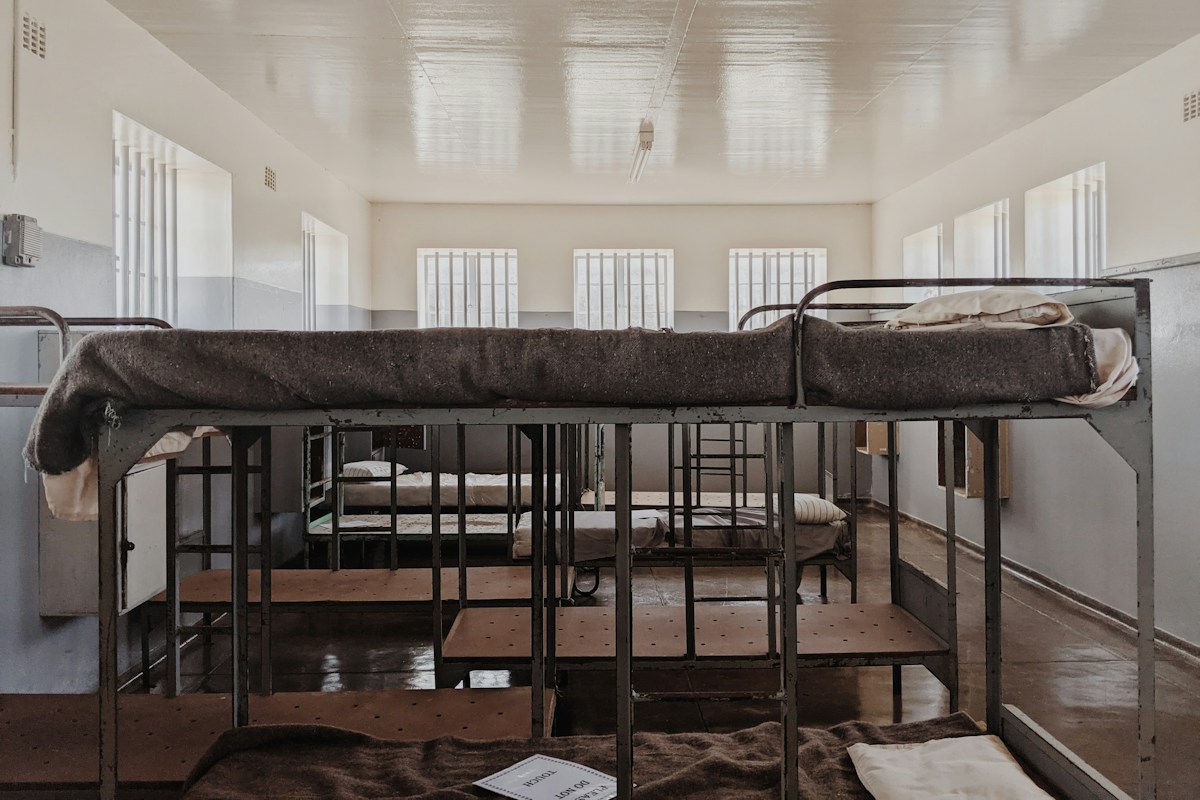
The physical environment matched this carceral philosophy. Hundreds of metal bunk beds or thin vinyl cots were packed tightly together on bare concrete or linoleum floors inside vast, unpartitioned rooms with glaring fluorescent lighting, industrial cinderblock walls, and deafening echoes. These spaces induced extreme sensory overload and terror in individuals surviving with severe post-traumatic stress disorder, traumatic brain injuries, and military combat trauma. Fearing violence, sexual assault, bedbug infestations, and theft of their few remaining possessions, unsheltered individuals rationally concluded that street encampments, despite their severe physical hazards, offered far greater personal autonomy, physical safety, and human dignity as documented by researchers at the Urban Institute Metropolitan Housing Center.
Core Principles of Low-Barrier Operations: Dismantling Admission Obstacles
Low-barrier emergency shelter operations represent a complete philosophical inversion of the legacy paradigm. The low-barrier model is built upon a fundamental ethical premise: emergency shelter is an absolute human right and an urgent life-saving public health intervention. No individual should ever be forced to sleep in dangerous outdoor elements simply because they struggle with active mental illness, chemical addiction, legal entanglements, or lack bureaucratic paperwork.
Third, No Criminal Background Disqualifications: facilities eliminate blanket criminal record exclusions. Individuals with non-violent felony records, prior drug offenses, or active probation status are welcomed unconditionally, ensuring that the criminal justice system does not function as an eviction pipeline into street homelessness. Only narrow, legally mandated restrictions, such as statutory exclusions for individuals on registered sex offender registries where children reside on-site, are maintained in compliance with state law. Fourth, Low Documentation Thresholds: guests are admitted immediately without requiring state photo IDs, birth certificates, or proof of income, allowing the shelter team to assist the guest in acquiring necessary documentation after they are safely housed inside.
Furthermore, low-barrier shelters dismantle the devastating Day-Ejection Protocol by instituting 24/7 Continuous Bed Reservation. Once a guest is assigned a bed, that bed is their dedicated, private sanctuary twenty-four hours a day, seven days a week, for the entire duration of their stay. Guests do not pack up their belongings every morning or wait in competitive daily lines; they can sleep late, rest during the day to recover from illness, store their belongings safely in locked wardrobes, and leave for work or medical appointments knowing that their bed will be waiting for them upon their return as championed by the National Low Income Housing Coalition.
Accommodating Partners, Pets, and Possessions: The 3Ps of Low-Barrier Dignity
In the national practice of street outreach, clinical navigators consistently identify three primary structural barriers that compel unsheltered individuals to decline traditional emergency shelter beds: the forced abandonment of Partners, Pets, and Possessions (the 3Ps). For an unhoused human being surviving in an extreme, hostile environment, these three elements are not trivial lifestyle choices; they are the fundamental anchors of emotional survival, physical protection, and human identity.
Accommodating Partners is an urgent operational necessity. Traditional emergency shelters are strictly segregated by gender, operating separate facilities for single men and single women. When an unhoused couple, married, unmarried, or LGBTQ+, presents at a traditional shelter, they are told they must separate, often assigned to facilities miles apart on opposite sides of the city. For couples who have guarded each other lives through years of street violence, forced separation is intolerable. Low-barrier shelters solve this by providing dedicated Couples Rooms or semi-private partitioned living suites where adult partners can stay together safely, preserving the vital emotional bond that sustains their resilience.
Accommodating Companion Pets represents the second critical pillar. Across America, an estimated ten to twenty-five percent of unsheltered individuals live with a companion animal, typically a dog or cat. To an unhoused person, their pet is their constant, non-judgmental companion, source of unconditional love, and physical protection against street predators. Traditional shelters enforce blanket no-pets policies, demanding that an individual abandon their animal to municipal animal control before crossing the threshold. Thousands of people refuse shelter to protect their pets. Low-barrier facilities are Pet-Friendly Facilities: providing on-site indoor kennels or allowing pets to sleep beside their owners bed, offering free pet food, partnering with veterinary non-profits for free vaccinations, and maintaining secure outdoor relief and play areas.
Accommodating Possessions resolves the fear of catastrophic material theft. When an individual survives on the street, their shopping cart or backpack contains their entire life: warm winter sleeping bags, family heirlooms, irreplaceable photo albums of deceased parents or estranged children, clothing, and vital identification records. Traditional shelters restrict personal belongings to a single small plastic bin, forcing guests to discard the rest of their survival gear on the sidewalk. Low-barrier shelters provide Generous, Secure Property Storage: offering large lockable rolling lockers, secure on-site storage containers, or dedicated bicycle and cart storage corrals protected by electronic access control, ensuring that guests can enter shelter with complete peace of mind that their survival belongings are safe.
Trauma-Informed Architectural Design: Acoustics, Lighting, and Personal Sightlines
The physical spatial environment of an emergency shelter directly influences the neurobiology and behavioral stability of its occupants. Individuals who have survived chronic trauma, physical assaults, and prolonged street hyper-vigilance carry nervous systems that are continuously tuned to perceive environmental threats. When shelter architecture is loud, dark, chaotic, and overcrowded, the sensory assault triggers immediate amygdala activation, precipitating defensive panic, behavioral agitation, and physical flight. Low-barrier shelters overcome this through Trauma-Informed Architectural Design.
Acoustic Engineering represents the primary environmental priority. In traditional open congregate shelters, the cacophony of coughing, snoring, crying, arguing, and metal doors slamming reverberates off hard cinderblock walls at deafening eighty-decibel levels, making restorative sleep impossible. Modern facilities employ Advanced Acoustic Decoupling: installing perforated acoustic ceiling baffles, sound-absorbing wall panels made from recycled wood-wool fibers, and sound-dampening flooring materials that reduce reverberation times below 0.6 seconds. Mechanical HVAC systems are engineered with ultra-quiet duct silencers, and sleeping areas are physically segregated from noisy communal dining and intake zones.
Circadian Lighting Architecture is integrated to restore shattered biological sleep-wake cycles. Standard fluorescent lighting emits a harsh, cold blue flicker that suppresses melatonin synthesis, elevates cortisol, and triggers migraines. Trauma-informed shelters utilize Full-Spectrum Tunable LED Lighting systems that automatically mimic the natural solar cycle: delivering bright, warm daylight tones (5,000 Kelvin) in morning and afternoon hours to promote alertness and vitamin synthesis, and gradually transitioning to soft, amber-red hues (2,200 Kelvin) in the evening to stimulate natural melatonin production and induce restorative sleep.
Furthermore, architects prioritize Spatial Sightlines and Biophilic Openness. Corridors are designed wide (minimum 60 to 72 inches) with gentle curves rather than blind, sharp ninety-degree corners that create ambush anxiety. Sleeping pods and seating arrangements are oriented to afford occupants Clear Defensive Sightlines: allowing an individual to see who is approaching their space while resting their back against a solid wall. Expansive windows bring abundant natural sunlight into day lounges, while interior living walls and courtyards connect residents to living plant life, lowering resting blood pressure and inducing deep neurobiological calm as documented by researchers at the HUD Exchange Office of Special Needs Assistance.
Non-Congregate vs Congregate Shelter Models: Public Health and Human Dignity
A historic evolutionary leap in modern emergency shelter design is the national transition from Congregate Warehouses to Non-Congregate Shelter (NCS) Models. Congregate sheltering, where dozens of unrelated adults sleep in a single shared room, was born out of financial austerity, maximizing bed counts while minimizing per-square-foot construction costs. However, decades of clinical and public health data have proven that congregate sheltering is fundamentally obsolete, medically dangerous, and clinically counterproductive.
While non-congregate shelter facilities carry higher initial capital development costs than open congregate dormitories, their lifecycle economic returns are overwhelmingly superior. When factoring in the radical reduction of security contracts, avoided emergency room hospitalizations, eliminated communicable disease outbreak containment costs, and rapid client throughput into permanent housing, non-congregate sheltering represents the gold-standard, cost-effective future of emergency hospitality as affirmed by research curated by the Urban Institute Centers on Social Policy.
Trauma-Informed Intake Workflows: Replacing Interrogations with Radical Hospitality
The intake encounter is the critical gateway that determines whether an unhoused individual enters the rehousing pipeline or flees back to the street. In traditional emergency shelters, intake was structured like a forensic law enforcement interrogation: an exhausted, traumatized person stood before an elevated bulletproof glass counter while an administrative clerk fired forty invasive questions regarding criminal records, addiction histories, psychiatric hospitalizations, and family failures, demanding formal paperwork before a bed could be offered.
The intake conversation is framed around a Collaborative Problem-Solving and Diversion Protocol. The navigator asks empowering, open-ended questions: What would help you feel safer tonight? Is there a safe friend or family member who could provide a temporary alternative to entering shelter? What are your immediate goals for tomorrow? If the guest cannot be immediately diverted to a safe natural support network, they are escorted to their private room or sleeping pod, handed their personal room key or locker code, and introduced to facility amenities with warmth, dignity, and unconditional respect.
Behavioral De-escalation and Restorative Justice: Transforming Rule Enforcement
Managing community life in an emergency shelter housing dozens of traumatized individuals living with untreated psychiatric disabilities, chronic pain, and substance use disorders presents daily operational complexities. In traditional shelters, rule enforcement was governed by Zero-Tolerance Disciplinary Codes: minor infractions such as swearing at staff, raising one voice, missing curfew by ten minutes, or smoking near a window triggered immediate disciplinary write-ups, culminating in 30-day, 60-day, or lifetime administrative expulsions (commonly known as 86ing).
When a guest experiences a behavioral crisis or interpersonal conflict with a peer, staff do not call 911 armed police dispatch; calling police to manage behavioral health crises is recognized as an absolute systemic failure that criminalizes poverty and escalates violence. Instead, staff step in with calm physical posture, gentle vocal tones, and compassionate active listening, offering the individual a quiet, low-stimulation sensory de-escalation room to regain emotional equilibrium.
Restorative Justice circles are utilized to resolve community conflicts. If an argument occurs between residents in a community room, a trained facilitator convenes a restorative dialogue where both parties express how the conflict affected them, agree upon mutually respectful boundaries, and repair community harmony. Expulsion is legally restricted to immediate, severe, unmitigated physical violence or active weapons threats, and even in those rare instances, the exclusion is temporary (typically 24 to 48 hours), paired with immediate transfer to an alternative crisis respite facility. The guiding operational goal is to avoid discharging a resident into homelessness whenever a safe alternative is available as documented by the National Health Care for the Homeless Council (NHCHC).
Harm Reduction Integration: Overdose Prevention and Safe Storage Protocols
In the contemporary synthetic opioid and fentanyl era, emergency shelters that refuse to adopt robust Harm Reduction Protocols are not merely failing in their mission; they are operating as sites of preventable fatal overdose deaths. Individuals with severe opioid use disorders who enter shelter facilities and attempt forced, unmonitored abstinence lose their pharmacological opioid tolerance in as few as three to five days. When cravings overwhelm them and they use street fentanyl in a locked shelter bathroom, the loss of tolerance results in instant respiratory arrest and fatal overdose.
Low-barrier emergency shelters combat this catastrophe by embedding Comprehensive Overdose Prevention Shields throughout the physical facility. First, Nasal Naloxone (Narcan) is Ubiquitously Distributed: mounted in automated external defibrillator (AED) style emergency response cabinets in every hallway, community lounge, dining room, and staff station, accompanied by clear visual pictograms. Every single staff member, from security guards to custodial technicians, carries naloxone on their person at all times and undergoes mandatory bi-monthly overdose response drilling.
Second, facilities modernize Restroom Architecture to Prevent Fatal Overdoses. Bathrooms represent the most common location for fatal overdoses in shelter facilities because individuals lock doors seeking privacy. Modern shelters install Reverse-Latching Emergency Restroom Hardware: doors that can be unlocked and opened from the outside by staff in under three seconds without tools. Furthermore, bathrooms are equipped with Motion-Sensor Acoustic and Infrared Presence Monitors that sound an unobtrusive chime at the front desk if an occupant remains motionless on the floor for more than three minutes, enabling staff to intervene with life-saving naloxone before anoxia causes irreversible brain death.
Housing-Focused Shelter Operations: Rapid Exit Triage and Dynamic Navigation
The ultimate measure of excellence for an emergency shelter is not how many nights a bed is filled, but how rapidly and sustainably guests exit into permanent housing. An emergency shelter that provides beautiful amenities, excellent food, and compassionate care, but allows guests to languish for months or years in institutional limbo, is fundamentally failing in its core mission. High-performing low-barrier shelters operate as Housing-Focused Shelters, where every single operational workflow is aligned around rapid permanent housing exit.
On Day One of a guest stay, the shelter team initiates Rapid Exit Triage and Housing Problem-Solving Navigation. Rather than waiting for a guest to complete arbitrary shelter programming phases, dedicated on-site Housing Navigators engage the guest immediately. Navigators explore immediate diversion and self-resolution options: Navigators may assess whether flexible financial assistance could resolve past-due utility debt and make a safe family placement possible. A navigator may ask whether an employer offers a lawful wage-advance option. Transportation assistance may be considered when a safe family placement in another city has been independently confirmed.
For guests requiring subsidized housing, the shelter team operates as an accredited Coordinated Entry Access Point. Navigators complete standardized vulnerability assessments, enter the guest into the regional Homeless Management Information System (HMIS) queue, and aggressively eliminate all bureaucratic documentation barriers. Teams acquire certified birth certificates, state IDs, and Social Security disability verification letters, assembling a complete, audit-ready Document Readiness Portfolio within fourteen days of shelter intake.
Shelter navigators maintain active daily partnerships with regional rapid re-housing providers, permanent supportive housing developers, and private-market landlords. The facility hosts weekly Landlord Recruitment Mixers and on-site housing leasing clinics, where property managers visit the shelter to interview prospective tenants, execute leases, and hand over apartment keys right inside the community room. By maintaining an intense, urgent focus on housing exit, high-performing shelters compress average lengths of stay from eighteen months down to forty-five to sixty days, maximizing bed turnover velocity and keeping the front door of the crisis response system wide open for unsheltered neighbors in need.
Financing Low-Barrier Shelters: HUD Emergency Solutions Grants and Local Levies
Building, modernizing, and operating high-capacity low-barrier emergency shelter infrastructure requires sophisticated, multi-layered capital stacking. Traditional municipal shelter funding was notorious for its fragility, relying on meager per-night bed reimbursements that forced operators to pack cots into warehouse spaces to cover basic building rent. Modern low-barrier facilities require sustainable operating capital to finance private non-congregate units, professional multidisciplinary case management, 24/7 security, and comprehensive culinary operations.
At the federal level, the foundational funding stream is the HUD Emergency Solutions Grants (ESG) Program. ESG formula grants allocated to states, metropolitan cities, and urban counties can be utilized directly for emergency shelter renovation, conversion, and operational costs. ESG explicitly permits expenditures for shelter operating expenses (rent, utilities, insurance, maintenance, food), essential supportive services (case management, child care, mental health counseling, transportation), and rapid re-housing navigation, providing an indispensable baseline funding engine.
Concurrently, progressive municipalities are passing dedicated Local Voter-Approved Tax Levies and Real Estate Transfer Taxes to fund permanent shelter capital and operations. Cities such as Los Angeles (Measure H and Measure ULA), Seattle, Denver, and Portland have dedicated hundreds of millions of dollars in local tax revenue specifically to construct modern non-congregate shelter communities and fund 24/7 operational staffing. Local revenues are particularly valuable because they carry zero federal statutory restrictions, allowing shelters to serve undocumented immigrants, provide flexible client assistance funds, and execute rapid site acquisitions without federal environmental review delays.
Philanthropic foundations, corporate giving circles, and healthcare systems contribute the final catalytic layer of the capital stack. Hospital health systems, recognizing that low-barrier shelters provide safe post-hospitalization discharge destinations that prevent expensive readmissions, contract directly with shelter operators, funding dedicated medical respite wings and specialized clinical nursing staff. Braiding federal ESG formula grants with local municipal tax revenues and healthcare system contracts creates an unbreakable, permanent financing foundation that sustains world-class emergency hospitality operations as documented by the Urban Institute Policy Centers.
Performance Benchmarks and Systemic Evaluation: Length of Stay and PSH Exits
The operational refinement, community accountability, and political viability of low-barrier emergency shelters depend upon rigorous, transparent data governance and empirical performance evaluation. Historically, emergency shelters operated with near-zero accountability, measuring nothing more than bed occupancy rates: as long as beds were full every night, the program was deemed a success, regardless of whether guests ever exited to permanent housing or cycled endlessly between shelters and the street.
Modern Continuums of Care evaluate emergency shelters against rigorous HUD System Performance Measures (SPMs) tracked longitudinally through the regional Homeless Management Information System (HMIS). The primary operational benchmark is Average Length of Stay (LOS) in Shelter. High-performing housing-focused shelters target an average length of stay of forty-five to sixty days, viewing any stay exceeding ninety days as a systemic red flag requiring intensive case review and resource escalation.
The second decisive benchmark is the Rate of Successful Exits to Permanent Housing. High-performing low-barrier shelters achieve verified permanent housing exit rates exceeding fifty to sixty-five percent of all discharged guests, transitioning residents into permanent supportive housing, rapid re-housing apartments, or unsubsidized private-market leases. Conversely, facilities where more than twenty percent of discharges exit back to literal street homelessness are subjected to intensive technical assistance and contractual remediation.
Additional key performance indicators include the Rate of Return to Homelessness (Recidivism) at six, twelve, and twenty-four months post-exit, Average Daily Bed Utilization Rate (targeting 90 to 95 percent capacity), and Involuntary Disciplinary Expulsion Rates (targeting under 2 percent of total enrolled guests). Continuums of Care publish quarterly public performance dashboards, comparing shelter facilities across the jurisdiction and allocating competitive public funding bonuses to providers that demonstrate superior housing exit velocity, racial equity parity, and low-barrier fidelity as analyzed by researchers at the HUD Exchange Policy Library.
Comparative Matrix of Emergency Shelter Operational Frameworks
To design an optimal, high-velocity emergency crisis response system, municipal leaders, Continuum of Care boards, and shelter operators must systematically evaluate the distinct structural parameters, entry criteria, operational costs, and permanent housing exit efficacies across available emergency sheltering models. Misallocating capital to outdated shelter models perpetuates street homelessness: building high-barrier congregate facilities results in chronically empty beds while hundreds of unhoused individuals sleep on adjacent sidewalks, while operating basic winter overflow cots fails to provide the stable foundation required for permanent housing transition.
The comparative matrix below provides an authoritative technical breakdown of the four primary emergency shelter models operating across North American cities: Low-Barrier Non-Congregate Shelter (NCS), Low-Barrier Modern Congregate Shelter, Traditional High-Barrier Rescue Mission Shelter, and Seasonal Cold-Weather Overflow Warming Cots. By comparing admission hurdles, accommodation of partners/pets/possessions (3Ps), average daily cost per bed, average length of stay, and permanent housing exit rates, this matrix equips policymakers with the strategic clarity required to invest public capital with maximum efficacy.
| Shelter Framework | Admission Preconditions | 3Ps Accommodation (Partners/Pets/Gear) | Average Operating Cost | Average Length of Stay | Permanent Housing Exit Rate |
|---|---|---|---|---|---|
| Low-Barrier Non-Congregate (NCS) | Zero: no sobriety, drug screens, or IDs required | Full: private rooms accommodate couples, pets, gear | $80 to $140 per room/night | 45 to 60 days (rapid throughput) | 55% to 70% permanent exits |
| Low-Barrier Modern Congregate | Zero: low documentation; behavioral focus only | Moderate: on-site kennels, large lockers, pod partitions | $45 to $75 per bed/night | 60 to 90 days | 40% to 55% permanent exits |
| Traditional High-Barrier Rescue Mission | Extreme: breathalyzer, drug screens, ID, chapel | Zero: gender-segregated; no pets; 1 small bag limit | $30 to $50 per bed/night | Indefinite / multi-month program | 15% to 25% (high street drop-off) |
| Seasonal Overflow Warming Cots | Minimal: life-safety weather triggers only | Minimal: emergency survival gear allowed; no kennels | $25 to $40 per cot/night | 1 to 5 nights (freeze events only) | Under 5% (pure crisis shelter) |
Frequently Asked Questions About Low-Barrier Emergency Shelter Architecture
What is a Low-Barrier Emergency Shelter?
A low-barrier emergency shelter is an immediate crisis facility that eliminates artificial preconditions to entry, such as mandatory sobriety, drug testing, criminal background exclusions, required religious participation, or identification documentation, admitting individuals solely based on their need for safety and shelter.
What are the 3Ps of low-barrier sheltering?
The 3Ps stand for Partners, Pets, and Possessions. Low-barrier shelters accommodate adult couples without forced gender segregation, provide pet-friendly boarding or in-room pet accommodations, and offer ample secure storage lockers for personal survival belongings and carts.
How does non-congregate shelter differ from congregate shelter?
Congregate shelters house dozens or hundreds of unrelated adults in large shared dormitory rooms with shared bunks. Non-congregate shelters provide private individual or couple rooms with private lockable doors, private bathrooms, and individual climate control, offering superior infection control and personal dignity.
How do low-barrier shelters maintain safety without drug testing or police?
Safety is maintained through trauma-informed environmental design, de-escalation training, 24/7 relational staffing, clear non-punitive community boundaries, and restorative justice protocols. Illicit drug consumption in common areas is prohibited, but relapses are treated with healthcare support rather than eviction.
How do trauma-informed architectural features reduce behavioral incidents?
Features such as sound-absorbing acoustic panels, circadian full-spectrum LED lighting, wide corridors with clear sightlines, and biophilic natural elements lower physiological stress and amygdala reactivity, reducing sensory overload and behavioral conflicts by up to 80 percent.
What is Housing-Focused Sheltering?
Housing-focused sheltering is an operational methodology where all shelter workflows, from day one intake onward, are aligned around identifying and executing a permanent housing exit plan, prioritizing housing problem-solving, document readiness, and landlord recruitment.
How do low-barrier shelters prevent fatal overdoses in restrooms?
Restrooms feature reverse-latching emergency hardware that staff can open from the outside in seconds without tools, paired with motion-sensor infrared presence monitors that chime if an occupant is motionless for three minutes, enabling rapid naloxone intervention.
What is the average length of stay in a high-performing low-barrier shelter?
High-performing housing-focused shelters achieve an average length of stay of 45 to 60 days, transitioning guests rapidly into permanent supportive housing or rapid re-housing while maintaining overall permanent housing exit rates exceeding 55 to 70 percent.
Future Horizons: Institutionalizing Dignified Emergency Hospitality as a Civic Right
Authored and Reviewed by the NHREA Editorial Board
Housing Policy Analysts, Urban Planners and Healthcare Advocates

Comments are closed